
Ultimate Guide to Buying a Home on Long Island: 2026 Edition
Buying a home on Long Island in 2026 requires more than finding a property you love. Buyers also need to understand home prices, property taxes, financing, inventory, commuting options, and the differences between Nassau and Suffolk County before deciding where their budget and lifestyle fit best.
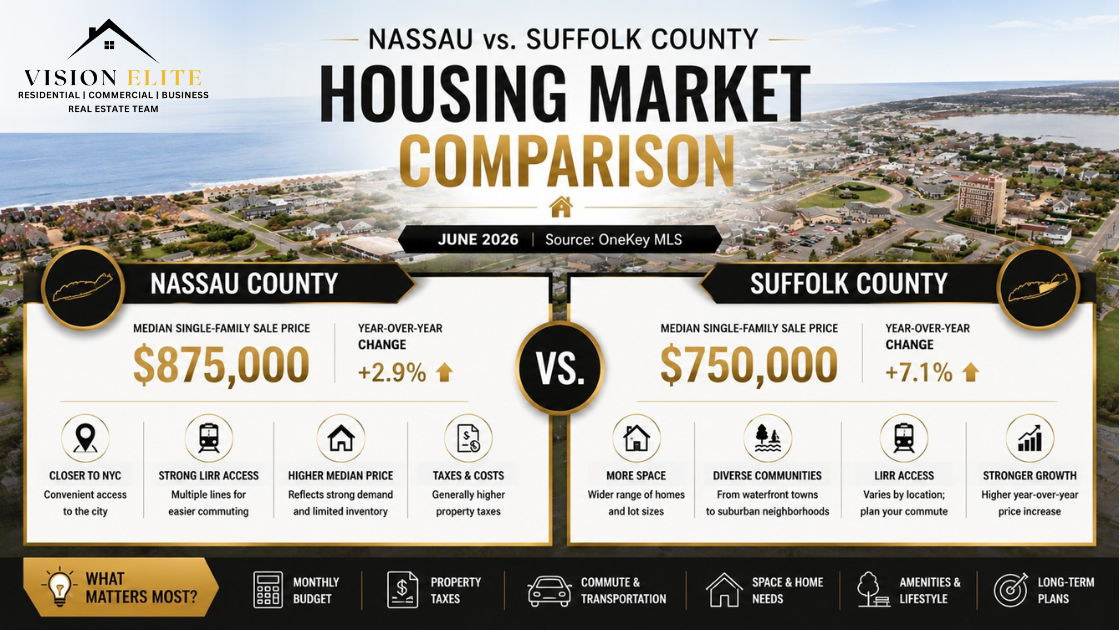
The numbers show why preparation matters. According to OneKey MLS, the June 2026 median single-family sale price reached $875,000 in Nassau County and $750,000 in Suffolk County, up 2.9% and 7.1% year over year, respectively. Limited inventory also continues to support competition for desirable homes.
Whether you're a first-time buyer, moving up because you need more space, relocating from New York City, or balancing a home search with a demanding healthcare career, this guide will help you understand the most important parts of buying a Long Island home.
At Vision Elite Real Estate Team, our goal is to make complicated real estate decisions easier to understand. We combine personalized guidance with local knowledge to help buyers move forward with confidence. For healthcare professionals, our We Serve You Program provides additional specialized resources and incentives designed around their unique needs.
It’s Bigger Than Real Estate.
What Is the Long Island Housing Market Like in 2026?
Long Island remains a competitive housing market in 2026, with limited inventory and continued buyer demand supporting home values.
OneKey MLS reported these June 2026 single-family median sale prices:
Nassau County: $875,000, up 2.9% year over year
Suffolk County: $750,000, up 7.1% year over year
Those numbers provide a useful snapshot, but Long Island isn't one uniform housing market. Prices can differ substantially between communities based on property type, condition, location, amenities, and local demand.
That's why buyers should look beyond county-wide statistics. Understanding what's happening in the specific communities you're considering can help you determine how quickly to act and what makes a competitive offer.
Key Takeaway: Focus on the home, neighborhood, complete monthly cost, and your long-term plans rather than trying to perfectly predict where the market will go next.
How Much Money Do You Need to Buy a Home on Long Island?
Your Long Island home-buying budget should include much more than the down payment.
Depending on your financing and qualifications, you may not need 20% down. However, a smaller down payment can affect your monthly mortgage payment and may introduce mortgage insurance or other costs.
Before deciding what you can comfortably afford, account for:
Down payment
Mortgage payment
Property taxes
Homeowners insurance
Closing costs
Inspection expenses
Moving costs
Immediate repairs or improvements
Emergency reserves
First-time buyers should also research available assistance programs. Nassau County, for example, has a down-payment and closing-cost assistance program with specific income, occupancy, counseling, mortgage, and eligibility requirements. Buyers should verify current availability before relying on assistance as part of their purchase.

How Do Property Taxes Affect Long Island Homebuyers?
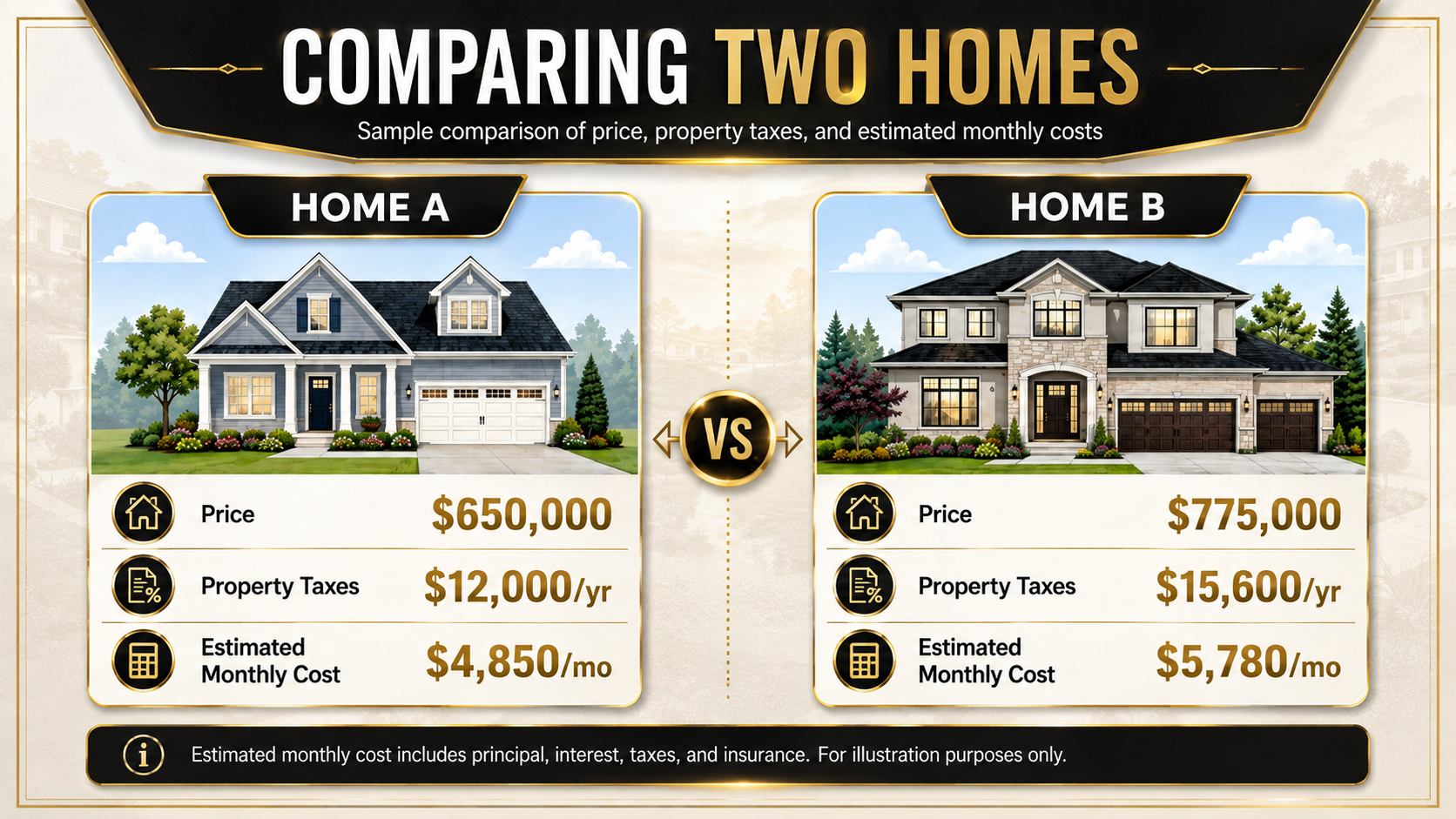
Property taxes can significantly change the true monthly cost of a Long Island home.
Two homes with similar asking prices can have very different monthly costs once property taxes are included. Before making an offer, review the property's current taxes and discuss anything you don't understand with the appropriate real estate, tax, or legal professional.
Eligible New York homeowners may also benefit from the School Tax Relief, or STAR, program. The Basic STAR credit is available for qualifying primary residences with household income of $500,000 or less. New homeowners register for the STAR credit rather than applying for the older STAR exemption.
Key Takeaway: Don't ask only, "Can I afford the purchase price?" Ask, "Can I comfortably afford the complete monthly cost of this home?
Should You Buy in Nassau County or Suffolk County?
Choosing between Nassau and Suffolk County depends on your budget, commute, desired space, and lifestyle priorities.
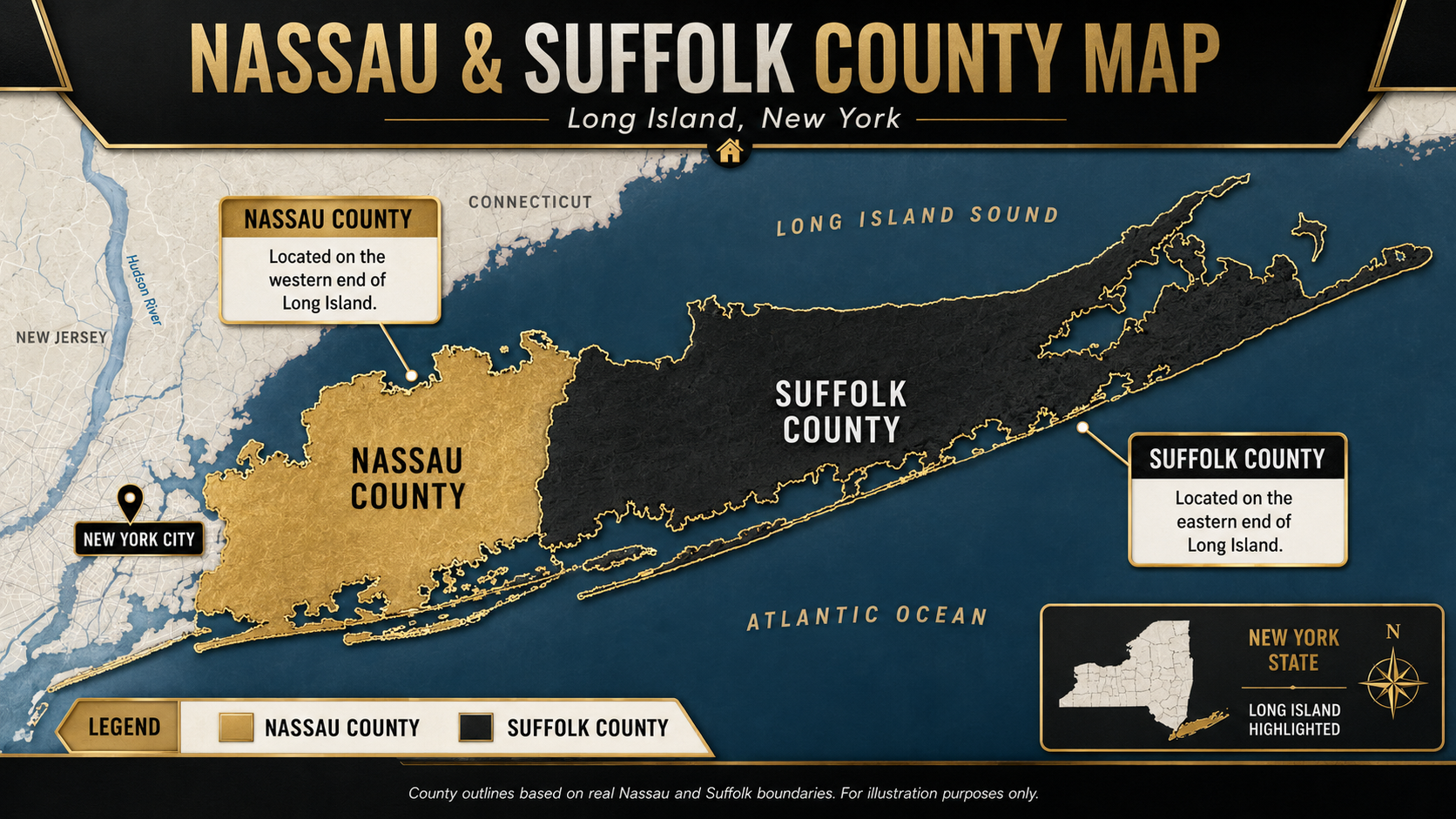
Nassau County can appeal to buyers who prioritize proximity to New York City and convenient commuting options. Current county-wide median prices, however, are higher than in Suffolk.
Suffolk County extends much farther east and provides a wide range of communities, housing types, and lifestyles. Depending on where you search, you may find different price points or more space, but commuting time can become an increasingly important consideration.
Instead of asking which county is "best," consider:
How often will you commute?
How much space do you need?
What total monthly payment works for you?
Which amenities matter most?
How important is access to the LIRR?
What type of community fits your lifestyle?
There isn't one best place to live on Long Island. The better question is which community best supports the life you want to live.
What Should NYC Buyers Know Before Moving to Long Island?
NYC buyers should evaluate the entire lifestyle change, not simply how much more space they can get for their money.
A larger home, yard, parking, and suburban lifestyle may be appealing. But homeownership can also introduce property taxes, maintenance, utilities, commuting expenses, landscaping, and other costs that weren't part of apartment living.
If you'll commute into New York City, test the door-to-door commute before choosing a community. Consider the trip to the station, parking, train schedule, transfers, and how the commute fits into your actual workday.
Ask yourself one simple question:
What will an ordinary Tuesday morning look like if I live here?
That answer may tell you more about whether a neighborhood works than another hour scrolling through listings.

What Should First-Time Buyers Know About Buying on Long Island?
First-time buyers should get financially prepared before making the home search their primary focus.
A strong buying process usually begins with understanding your finances, exploring financing with a qualified mortgage professional, establishing your complete monthly budget, and identifying the communities that fit your lifestyle.
Then you can begin searching with purpose.
Preparation also matters because Long Island's limited inventory can create competition for desirable homes. When the right property appears, knowing your budget and priorities can help you make a more confident decision.
Most importantly, don't assume homeownership is impossible simply because you don't have a 20% down payment. Explore your financing options and any assistance programs for which you may qualify.

What Should Move-Up Buyers Consider Before Buying Their Next Home?
Move-up buyers need a strategy that coordinates their current home with the purchase of the next one.
Maybe you need another bedroom, a larger yard, a home office, or a location that better fits your family's current lifestyle.
Before searching, consider your existing home equity, potential sale proceeds, next down payment, current mortgage, desired community, and timing.
Should you sell first? Should you buy first?
There isn't one answer for every homeowner. Your finances, current property, target market, and comfort with carrying or coordinating two transactions all matter.

How Can Healthcare Professionals Make Buying a Long Island Home Easier?
Healthcare professionals can simplify the process by building their home search around their work schedules, financial goals, and career demands.
Physicians, nurses, dentists, NPs, PAs, pharmacists, surgeons, and other healthcare professionals often don't have predictable schedules.
A new listing doesn't care that you just started a twelve-hour shift.
That's why Vision Elite Team created the We Serve You Program, which provides healthcare professionals with specialized real estate support, free resources, educational opportunities, and exclusive incentives.
Whether you're completing residency, relocating for a new position, opening a practice, managing student debt, or simply trying to search for homes around long shifts, your strategy should reflect your circumstances.
The goal is to make real estate fit your life, not make your life revolve around real estate.

Is 2026 a Good Time to Buy a Home on Long Island?
2026 can be a good time to buy if you're financially prepared and find a home that fits your budget and long-term plans.
Trying to perfectly time mortgage rates or home prices can leave buyers waiting for conditions nobody can guarantee.
Instead, ask:
Am I prepared to buy the right home if I find it?
If your finances are stable, you understand the complete cost of ownership, have appropriate reserves, and expect to stay in the home long enough for purchasing to fit your goals, moving forward may make sense.
If those pieces aren't in place yet, that's useful information too. You can use the time to strengthen your finances and prepare.

Conclusion
Buying a home on Long Island in 2026 isn't about finding a perfect market. It's about finding the right combination of home, community, financing, taxes, commute, and long-term fit.
Whether you're buying your first home, moving up, relocating from NYC, or navigating a purchase around a demanding healthcare career, preparation can turn an overwhelming process into a clear plan.
Ready to Buy a Home on Long Island?
Whether you're buying your first home, moving from New York City, searching for more space, or balancing homeownership with a demanding healthcare career, you don't have to figure it all out alone.
Connect with Vision Elite Real Estate Team for a complimentary, no-pressure buyer consultation. We'll help you understand your options, build a strategy around your goals, and confidently take the next step toward finding the right Long Island home.
Ready to make your move? Contact Vision Elite Team today and let's turn your homeownership goals into a plan.
https://www.visioneliteteam.com/contact
Stay Connected With Vision Elite
Follow us for Long Island market updates, home-buying tips, new listings, community highlights, and real estate education.

Frequently Asked Questions
-
No. The required down payment depends on your mortgage program and qualifications. Putting less than 20% down may affect your monthly payment or mortgage insurance, so compare your financing options with a qualified mortgage professional.
-
County-wide June 2026 data shows a higher median single-family sale price in Nassau County. OneKey MLS reported $875,000 in Nassau compared with $750,000 in Suffolk, although prices vary significantly by individual community and property.
-
Waiting for a lower rate doesn't guarantee a better overall buying opportunity. Lower rates could also bring additional buyers into the market, so consider your financial readiness, budget, timeline, and the property itself instead of relying on rate predictions.
-
Some buyers may qualify for assistance programs. Nassau County, for example, publishes a first-time homebuyer down-payment and closing-cost assistance program with income and other eligibility requirements. Always verify current funding and eligibility directly with the program.
-
Yes. Vision Elite Team's We Serve You Program is specifically designed for healthcare professionals and includes real estate resources, education, specialized support, and incentives for eligible participants.
Author Bio
About Vision Elite Real Estate Team
Vision Elite Real Estate Team helps buyers, sellers, investors, and relocating families navigate real estate with personalized service, education, and local expertise.
Through the We Serve You Program, Vision Elite also provides specialized resources and support for healthcare professionals pursuing their real estate goals.
Whether you're buying your first home, relocating to Long Island, or searching for your next property, our goal is to help make your move clearer and more manageable.
Making Your Moves Reality!
It’s Bigger Than Real Estate.
